

Tewerkstelling van buitenlandse
werknemers anno 2026
Mr. Sophie Maes en mr. Simon Albers (Claeys & Engels)
Webinar op vrijdag 23 oktober 2026
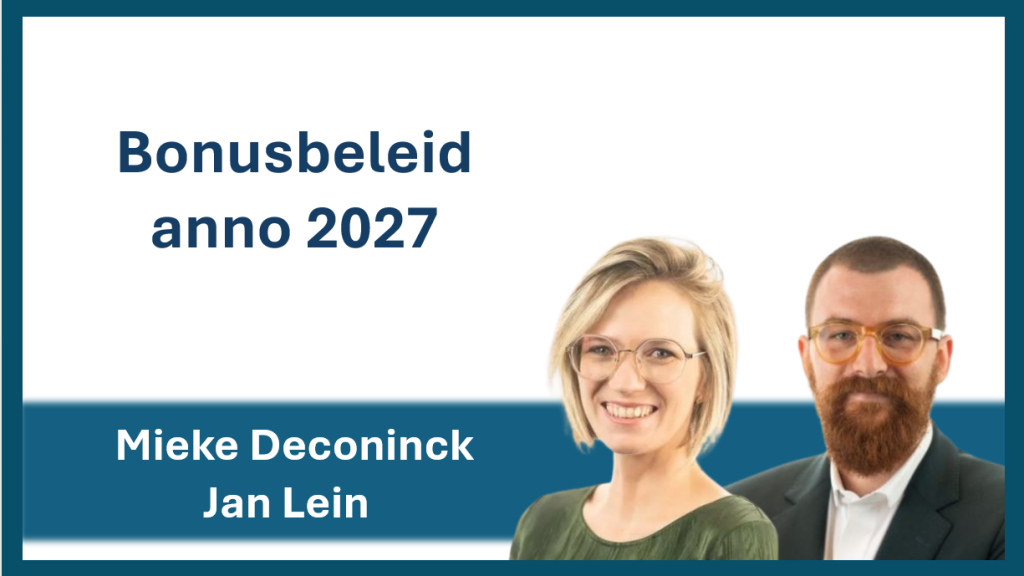
Bonusbeleid anno 2027.
Warrants en CAO nr. 90 onder de juridische loep
Mr. Mieke Deconinck en mr. Jan Lein (Claeys & Engels)
Webinar op vrijdag 29 januari 2027

Grensoverschrijdende sociale zekerheid
anno 2026: een update
Dhr. Bruno De Pauw (RSZ)
Webinar op vrijdag 20 november 2026

Wenst u meerdere opleidingen
te volgen bij LegalLearning?
Overweeg dan zeker onze voordeelformules!
Krijg toegang tot +250 opleidingen
Live & on demand webinars
Met tussenkomst van de kmo-portefeuille

Ontslag van A tot Z anno 2027
Mr. Kato Aerts, mr. Katrien Coenen
en mr. Sarah Witvrouw (Lydian)
Webinar op donderdag 25 februari 2027

Loontransparantie anno 2027
Mr. Dieter Dejonghe en mr. Veerle Van Keirsbilck
(Claeys & Engels)
Webinar op donderdag 18 februari 2027
Altun: Fraud and social dumping. The CJEU emphasises the double sides of the mutual trust coin (GAVC Law)
Auteur: GAVC Law
Date of publication: 02/06/2018
When I reported on Saugmandsgaard ØE’s Opinion in C-359/16 Altun, I emphasised the issue of mutual trust. I noted that the AG effectively flipped the coin: sincere co-operation requires sincerity on both sides (my words, not the AG’s). The AG had recalled the Halifax case-law of the CJEU: EU law cannot be relied on for abusive or fraudulent ends and that national courts may, case by case, take account — on the basis of objective evidence — of abuse or fraudulent conduct on the part of the persons concerned in order, where appropriate, to deny them the benefit of the provisions of EU law, in the light of the objectives pursued by the provisions of EU law concerned. In November 2017 the CJEU confirmed in C-251/16 Cussens that this principle has direct effect and is directly applicable: it is a general principle of EU law which does not require a national measure transposing it.
In the case at issue, the facts point to non-fulfillment of one of the substantive criteria for the E101 certificate to be issued, namely that only an undertaking which habitually carries on significant activities in the Member State in which it is established may be issued an E101 of that State.
The Court today has confirmed the AG’s view (only the Dutch and French version were available at the time of writing). Mutual trust implies responsibilities on both sides. Upon receiving indications of fraud, the Member State of origin is duty-bound to investigate diligently and either confirm or refute the suspicions. (In the event of continuing divergence, there is an appeals procedure within the relevant secondary law, and if need be the possibility for the host State to pursue infringement proceedings with the home State). Like its AG, the Court emphasises that the fraud must be established in the context of adversarial proceedings with legal guarantees for the persons concerned and in compliance with their fundamental rights, in particular the right to an effective remedy enshrined.
This remains relevant even after the planned changes to the posted workers Directive. In the future system, too, Member States will issue certificates, feed data into the newly created register etc.
» Bekijk alle artikels: Arbeid & Sociale zekerheid
Boeken in de kijker: